
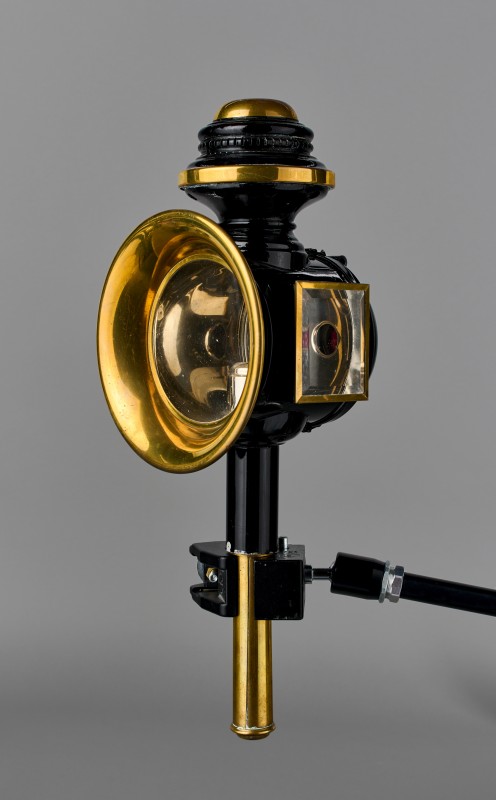
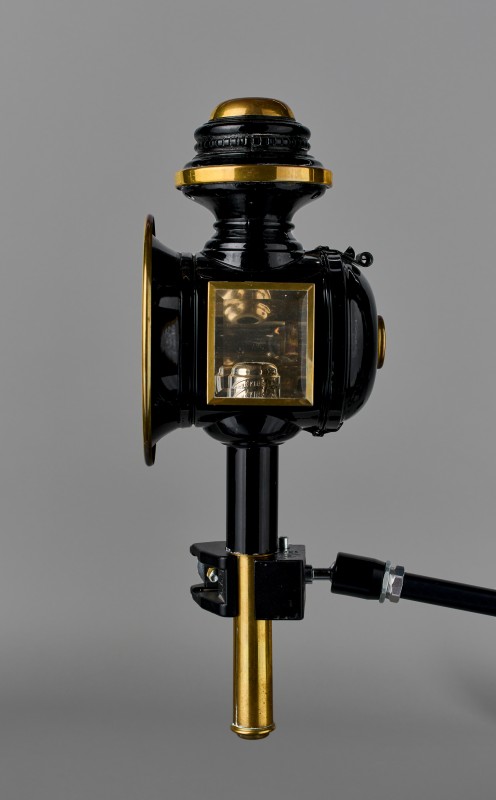
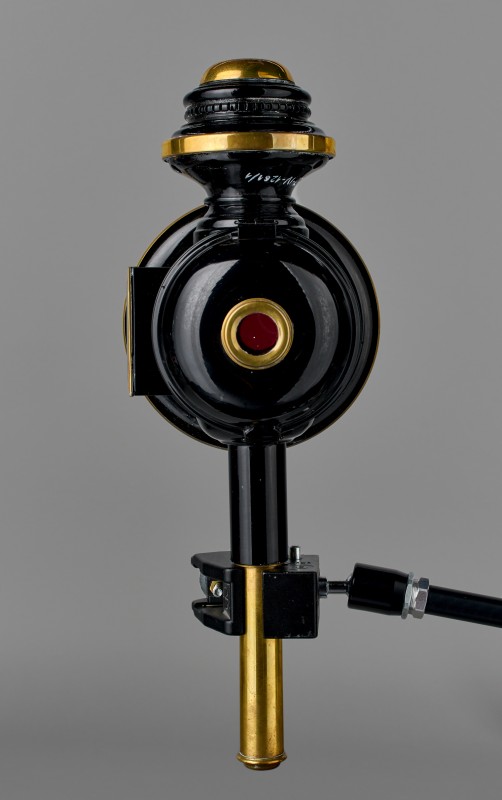
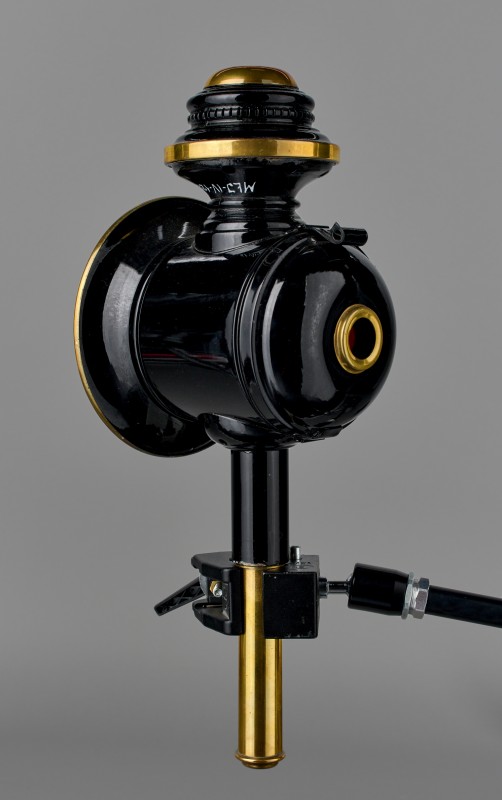
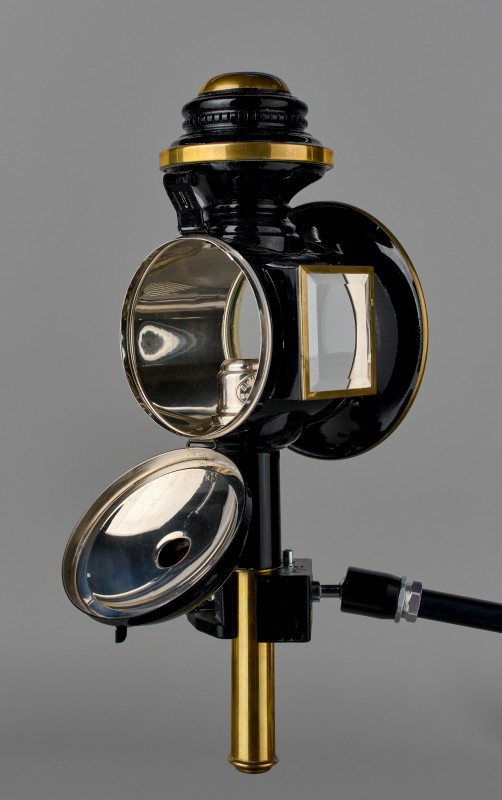
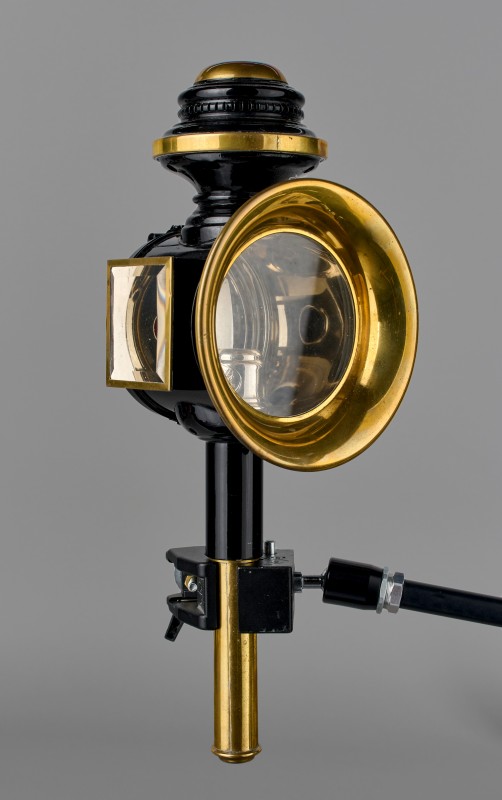
Carriage lantern, pair
- Date
- 19th/20th c.
- Object type
- lighting , lantern
- Technique
- various techniques
- Material
- lead glass, , steel sheet, sheet brass
- Dimensions
- h.: 46 cm cm
- Location
- The Kubicki Stables
- Place of Origin
- Offenbach am Main (Germany)
- Owner
- The Museum of Hunting and Horsemanship
- Acquisition name
- l'acquisition
- Museum number
- MŁJ-IV-1261/1-2
A typical carriage lantern consisted of a tented roof, and a body containing a spring-mounted wax candle.
Two of the side panels of the body were glazed with crystal glass; the other two, acting as reflectors, were made of metal which was silver- and brass-plated. As the candle burned down, the spring kept the wick above the candle holder. Carriage lanterns lit by wax candles came into use between 1750 and 1775.
Founded in 1782, the Dick & Kirschten factory was the main supplier of lanterns to the court of the Grand Dukes of Hesse and other princely courts in western Germany.